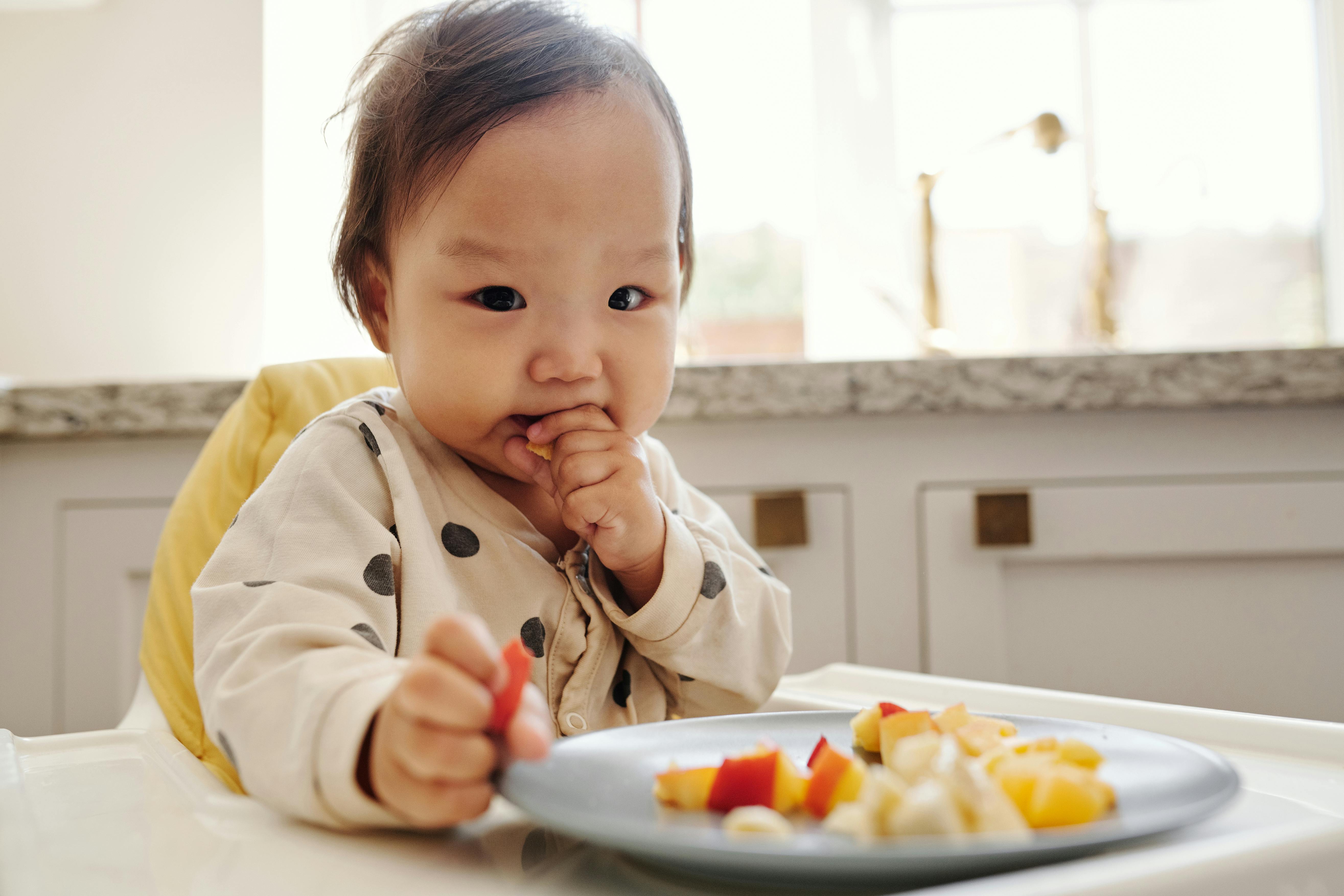
When I first began learning about transition to solids for babies, I thought it was simply about nutrition: purees, timings, and portion sizes. But over time, both through research and observing real families, I realized something far more meaningful: how we introduce solids shapes, not just what babies eat, but how they feel about food for years to come.
Around the 6-month mark, babies are developmentally ready to explore food. According to the World Health Organization, this is when breast milk alone no longer meets all nutritional needs, and complementary foods become essential. At this stage, babies are also curious, more coordinated, and eager to engage with their surroundings, including what’s on your plate.
But here’s where the “how” matters more than the “what.”
Why the Right Approach Matters
Research strongly emphasizes responsive feeding: encouraging babies to eat, but never forcing them. Caregivers are advised to “feed slowly and patiently… encourage them to eat but do not force them.” This approach is not just about avoiding mealtime struggles; it’s about helping babies build a positive relationship with food.
Executing this is where the trick lies, and where we come in.
In fact, complementary feeding between 6–23 months is considered a critical window where children develop long-term dietary patterns. This means that early experiences—whether joyful or stressful, can influence eating habits well into childhood.
I’ve personally seen the difference.
Babies who were allowed to explore food: touch it, squish it, taste it at their own pace, were more engaged and curious. Mealtimes felt like play, not pressure. On the other hand, babies who were constantly coaxed, distracted, or force-fed often became resistant, turning away from food or associating it with stress.
The Benefits of a Gentle, Baby-Led Transition
Introducing solids the right way offers more than just nutrition:
Better eating habits: Babies learn to recognize hunger and fullness cues, which supports healthier eating patterns later in life.
Improved motor skills: Self-feeding and handling food enhance coordination and sensory development.
Reduced picky eating: Exposure to textures and flavors early on encourages openness to a variety of foods.
Stronger parent-child bonding: Mealtimes become interactive and enjoyable rather than stressful.
There’s also a strong nutritional foundation to consider. Studies show that delaying solids beyond 6 months can lead to nutrient gaps, particularly in iron and energy needs. At the same time, introducing solids too early may increase risks like gastrointestinal issues or displacing breast milk. The balance lies in starting at the right time, and doing it in the right way.
Food Is Not a Task. It’s an Experience
One of the biggest mindset shifts I’ve had is this: food is not something to “get done.” It’s something to experience.
Babies don’t need perfectly measured spoonfuls. They need time. They need messy hands. They need the freedom to say “no” sometimes.
When we remove pressure, we allow curiosity to take over. And curiosity is what builds a lifelong love for food.
Personally, over time, I’ve seen this play out across so many families. The babies who were given control, who weren’t forced or rushed, grew into toddlers who enjoyed food. They sat at the table willingly, explored new tastes, and trusted their own hunger cues.
And honestly, that’s when it truly clicked for me.
The way we introduce solids isn’t just about feeding: it’s about teaching. Teaching babies that food is safe, enjoyable, and something they can engage with on their own terms.
At Birthgaon, this is what we deeply believe: when done right, the transition to solids becomes the foundation of a healthy, happy relationship with food. Not a battle, not a chore, but a beautiful beginning.